THE REFERENCE
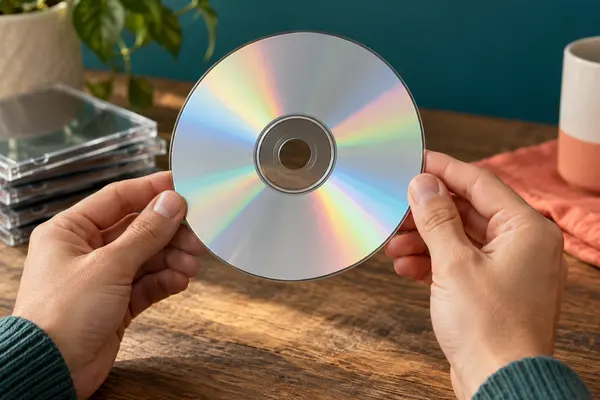
CD quality
Sound measured 44,100 times a second, 16 bits each time. The standard Philips and Sony set out in 1980.
Where it came from doodleaudio
DIGITAL AUDIO, DECODED
44.1 kHz, 16-bit, 320 kbit/s, lossless, hi-res. Here is what they mean.
Compare the formats
LISTENthen decide
Every song you stream or save comes with a string of numbers. Some matter a lot for file size, and less than you might think for what you hear. Here are the standards behind them and what listening tests found, in plain English.
Plain English, with the sources linked.
Updated
THE SHORT ANSWER
Most audio numbers describe how much data is kept.
The questions are how much, and whether you can hear it.
THE REFERENCE
Sound measured 44,100 times a second, 16 bits each time. The standard Philips and Sony set out in 1980.
Where it came fromLOSSY OR LOSSLESS
MP3 throws away the least audible parts to save space. FLAC shrinks files without losing anything.
Compare the sizesBEYOND CD
Listening tests found a small but real difference, mostly for trained listeners.
See the evidenceA QUICK FORMAT CHECK
Pick a format to see how much stereo audio it stores per minute, and whether anything is thrown away. The figures are worked out from each format's bit rate.
Lossy does not mean bad. It means some information is discarded for good, which matters most if you want to convert or edit the file later.
TWO NUMBERS WORTH KNOWING
File size changes enormously between formats.
What listeners can hear changes far less.
1/11 the size
A 128 kbit/s MP3 versus CD audio
The Library of Congress notes that a 128 kbit/s MP3 is about one eleventh the size of uncompressed CD-quality audio. Perceptual coding makes that possible by discarding or reducing the parts of the sound that are less audible.
MP3 · LIBRARY OF CONGRESS
~60% of the time
Trained listeners spotting hi-res audio
A Queen Mary University of London study pooled 18 studies, 450 listeners and over 12,000 trials. It found a small but significant ability to tell high-resolution audio from CD quality; trained listeners did best.
HI-RES · 2016 META-ANALYSIS
Guessing would score 50%. So the hi-res difference is real, but it is subtle, and far smaller than the jump in file size.
TRY IT AT HOME
Many players and streaming apps have a quality setting for mobile data, Wi-Fi and downloads. Look at what yours is set to before buying anything new.
If you rip or record music, keep a lossless copy such as FLAC. You can always make smaller MP3s from it, but never the other way round.
Ask someone to switch between two versions of the same track without telling you which is which. Your ears are a better guide than the label.
If your phone or headphones show listening levels or a sound allowance, take a look. The WHO-ITU standard is built around exactly that kind of weekly tracking.
AUDIO FACTS
Philips and Sony released the first edition of the Red Book in 1980. It set CD audio at a 44.1 kHz sampling rate with 16-bit samples, and was later ratified as IEC 60908.
The range of human hearing is roughly 20 to 20,000 hertz, and the highest frequencies are progressively lost with age.
MP3 is Layer III of the MPEG-1 audio standard, ISO/IEC 11172-3, published in 1993 after work by engineers including a team at Fraunhofer IIS. Its patents expired in April 2017.
The IETF published FLAC as RFC 9639 in December 2024. It compresses audio without losing information, at bit depths from 4 to 32 bits and with up to 8 channels.
A 2019 WHO and ITU standard for listening devices uses 80 dB for 40 hours a week as the reference for adults and 75 dB for children, tracked as a "sound allowance".
QUICK QUESTIONS
Short answers to the questions people ask most.
It is the CD audio standard, first set out in the Red Book by Philips and Sony in 1980. The sound is measured 44,100 times a second, and each measurement is stored as a 16-bit number. In stereo that adds up to about 1,411 kilobits every second.
MP3 is lossy: it uses perceptual coding to discard parts of the sound judged less audible. At 128 kbit/s a file is about one eleventh the size of CD audio. Higher bit rates such as 320 kbit/s discard less. Whether you notice depends on the music, your equipment and your ears.
A 2016 meta-analysis of 18 studies, with over 12,000 trials and 450 listeners, found a small but significant ability to tell high-resolution audio from CD quality. Trained listeners picked it out around 60% of the time, so the difference is real but subtle.
No. FLAC keeps exactly what it is given, without losing information, but it cannot restore what lossy encoding already threw away. Converting an MP3 to FLAC gives you a bigger file with the same sound.
A 2019 WHO and ITU standard for listening devices uses 80 dB for 40 hours a week as the reference exposure for adults, and 75 dB for 40 hours a week for children. Devices that follow it track your listening as a percentage of that weekly sound allowance.
A NAME WORTH HEARING
doodleaudio.com is part of the DoodleSale portfolio. It isn't in an auction right now, but you can ask about leasing it.